
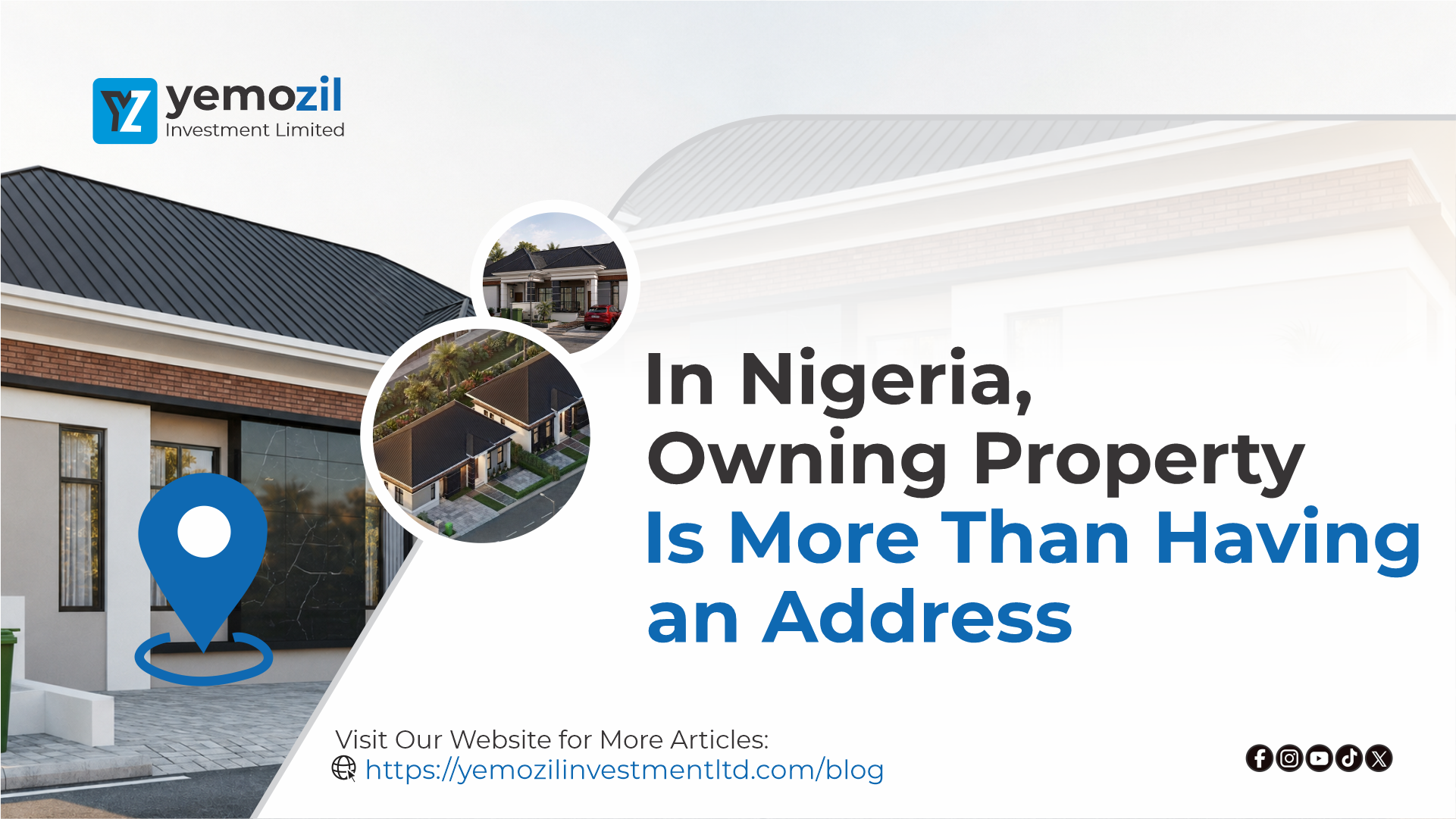
For many Nigerians, owning property is one of those milestones that carries a meaning beyond the transaction itself. It can represent stability, independence, family security or simply the satisfaction of knowing that something tangible belongs to you. After years of paying rent, moving from one apartment to another or putting money aside for the future, having a property of your own can feel like finally putting down roots.
But there is another side to property ownership that is becoming increasingly important. In today’s Nigeria, buying property is not only about having an address. For many people, it is also about what that property can do for them over time.
A home can be a place for a family to live today while remaining an asset that may serve another purpose in the future. An apartment can be purchased with rental income in mind. A property can become part of a family’s long-term financial plans or provide a foundation for future development. For someone running a business, the right property may also provide a more suitable environment for work and growth.
This is why the question should not end with, “Can I afford this property?” A more useful question is, “What am I expecting this property to do for me?” That distinction can change the way a person approaches a property decision.
Someone looking for a family home may be more concerned about the surrounding environment, accessibility, parking, security arrangements and the general quality of the development. Someone considering a property as an investment may look more closely at its location, demand, potential use and the kind of people likely to want to live there. Another buyer may simply want a well-planned apartment that can serve as a comfortable home without creating unnecessary problems later.
The property may be the same, but the reasons for buying it can be completely different. Location is therefore more than a point on a map. Where a property is situated can influence how convenient everyday life becomes, who the property appeals to and how it fits into a person’s wider plans. This is one reason why property decisions require looking beyond the building itself.
The development also matters. Two apartments can have similar sizes and still offer very different experiences depending on how the surrounding space has been planned and maintained. Things such as road access, parking, perimeter fencing, gate infrastructure, surveillance and power arrangements may sound like technical details during a property inspection, but they become part of everyday life once someone moves in.
Consider something as simple as parking. It may not seem particularly important when someone is comparing photographs online, but adequate parking becomes a practical issue when residents return home after work, receive visitors or have more than one vehicle.
The same applies to power. An inverter system, for example, is not valuable merely because it appears on a list of property features. Its relevance becomes clearer when considered from the perspective of someone trying to maintain basic comfort and continuity in a home where electricity supply can be unpredictable.
This is where the difference between buying a building and buying into a development becomes important. Developments such as Charis Mews in Omole Phase 2, Ikeja, Ethan Court 1 and Pearl Court in Yaba, and Haven Court in Mowe are located in different parts of Lagos and address different property needs. Their locations alone create different considerations for buyers. Someone looking at property in Omole may have very different priorities from someone considering an apartment in Yaba or a property in Mowe.
That is why there is rarely a single answer to the question of what makes a property “right.” The better question is whether the property makes sense for the person buying it. For someone buying a home, the decision may be about comfort, accessibility and the environment in which the family will live. For another buyer, it may be about building an asset that can become useful over several years. For someone else, the immediate objective may be rental use or simply securing a property in a location that fits their plans.
The mistake is to approach all three decisions in exactly the same way. Property ownership also comes with a responsibility that is sometimes overlooked in the excitement of finally finding something affordable or attractive. Buyers need to understand what they are purchasing, why they are purchasing it and whether the development matches the purpose they have in mind.
A beautiful apartment can still be the wrong decision if it does not fit the buyer’s actual needs. In the same way, a property that may not initially appear exciting could prove useful because its location, layout or intended use aligns closely with what the buyer needs. This is why a property conversation should ideally begin before the payment conversation.
People often approach property companies only when they are ready to buy. But there is value in asking questions earlier: What type of property makes sense for my budget? Which location fits my plans? Am I buying for personal use, rental purposes or long-term ownership? What should I pay attention to when inspecting a development? What should I understand before making a commitment?
These questions can make the difference between simply owning property and owning property with a clear purpose. At Yemozil Investment Ltd, this understanding is central to how the company approaches conversations around property. The idea is not simply to have properties available, but to understand what a client is trying to achieve and help them consider the options from that perspective. Because property ownership is a major milestone, but the address is only the beginning. What matters in the long run is whether the property continues to make sense for the person who owns it.
Finding a property you genuinely like can be an exciting moment. After weeks or even months of searching, comparing prices, checking locations and scrolling through property listings, you finally come across an apartment that appears to tick most of the boxes. The pictures look good, the location seems suitable and the price falls within what you have planned to spend. At that point, the natural temptation is to move quickly before someone else takes the property.
But this is also the point where a buyer needs to slow down and ask the right questions.
Buying property is not like buying an ordinary household item where a change of mind may only mean returning to the shop. Real estate involves substantial financial commitments, and the decision can affect your finances, family and plans for years. This is why finding a property you like should not be the end of your search. In many cases, it should be the beginning of a more important conversation.
Before making payment, a serious buyer should want to understand exactly what they are acquiring, what comes with the property, what the development offers and whether the property actually suits the reason they want to buy in the first place. The questions may appear simple, but they can make a significant difference to the quality of the decision.
Is the location right for you? Does the property meet your intended purpose? What documentation is associated with the property? What infrastructure is available? What is the surrounding environment like? What payment arrangements apply? What happens after payment? Who do you contact when you need clarification?
These are not questions that should make a buyer feel difficult or overly cautious. They are normal questions for anyone putting a significant amount of money into property.
A beautiful property is only part of the decision
Property marketing has changed significantly. Buyers can now see photographs, videos, virtual tours, floor plans and project information without physically visiting a property. This has made property searches easier, but it has also created a new challenge. A property can look very attractive on a screen without the buyer fully understanding what ownership or occupancy will actually involve.
The apartment itself is only one part of the picture.
A buyer should also consider the road leading to the property, the surrounding neighbourhood, parking arrangements, security, access, power solutions and the general quality of the development. These details may not always receive as much attention as the number of bedrooms or the finishing of the apartment, but they can have a direct effect on everyday living.
This is why features such as good road networks, perimeter fencing, a gate house, ample parking space, CCTV surveillance and an inverter system are worth paying attention to when evaluating a property.
At Yemozil Investment Ltd, some of these considerations are reflected in developments such as Charis Mews in Omole Phase 2, Ikeja, where the development includes an inverter system, good road network, perimeter fencing, a gate house, ample parking space and CCTV surveillance.
The point is not simply to list these features as selling points. The more important question is what they mean to the person who will eventually live in or invest in the property. A buyer who understands the practical value of these features is in a better position to determine whether the property meets their expectations.
The right questions can save you from the wrong decision
One of the challenges first time property buyers often face is knowing what to ask. They may know that they should verify a property, but they may not know what verification involves or which questions deserve priority.
This is where having a meaningful conversation with the property company becomes important.
A buyer should be able to ask about the property without feeling that asking too many questions will make them lose the opportunity. They should be able to discuss their needs, explain their concerns and request clarification on areas they do not understand.
For someone considering a property in Yaba, for example, the conversation may involve developments such as Ethan Court 1 or Pearl Court. A buyer may want to understand the type of apartment available, the location, the development features and how the property fits their personal or investment plans.
Someone considering Haven Court in Mowe may have a different set of questions, particularly around location, accessibility and the reasons the property suits their intended purpose.
The same applies to Charis Mews in Omole Phase 2, Ikeja. A buyer may be interested in the apartment itself, but may also want to understand the surrounding environment, access, security and the facilities incorporated into the development.
The properties are different, the locations are different and the reasons people buy them may also be different. That is why a proper property conversation should begin with the buyer’s needs rather than simply presenting a property and asking for payment.
What are you really buying?
A property purchase should not be reduced to the question of how much the apartment costs.
The more useful question is what you are actually getting for the money.
This includes the property itself, the location, the development environment, available infrastructure, security arrangements, parking and other features that contribute to the experience of owning or living in the property.
It also includes understanding the terms of the transaction and what happens at different stages of the purchase.
For buyers who live outside Lagos or outside Nigeria, this becomes even more important. They may not be able to visit the property frequently or personally follow every stage of the process. In such situations, access to clear information and a reliable point of contact becomes particularly valuable.
The buyer should know who to speak to when they have questions and where to turn when they need clarification.
That relationship should not begin only when the buyer is ready to transfer money.
Property buying should include room for conversation
At Yemozil Investment Ltd, we believe property acquisition should involve more than showing a client what is available. It should involve understanding what the client is trying to achieve and helping them have a clearer view of the available options.
Our developments, including Charis Mews in Omole Phase 2, Ikeja, Ethan Court 1 and Pearl Court in Yaba, and Haven Court in Mowe, provide different opportunities for people with different property needs. Someone may be looking for a home. Another person may be looking for an investment. Someone else may simply be exploring the market and trying to understand what their money can reasonably acquire. Those conversations are worth having before a decision is made.
A buyer should not feel that they need to have every answer before approaching a property company. In fact, the questions they have may be the most useful starting point. Real estate is a major financial decision, and good decisions are rarely made by ignoring questions simply because a property looks attractive. Before you pay, ask. Before you commit, understand. Before you sign, make sure you know what you are agreeing to.
At Yemozil Investment Ltd, we believe clients should be able to come with their questions before they come with their money. Because when you are making a property decision, having someone you can talk to can make the entire process clearer.